
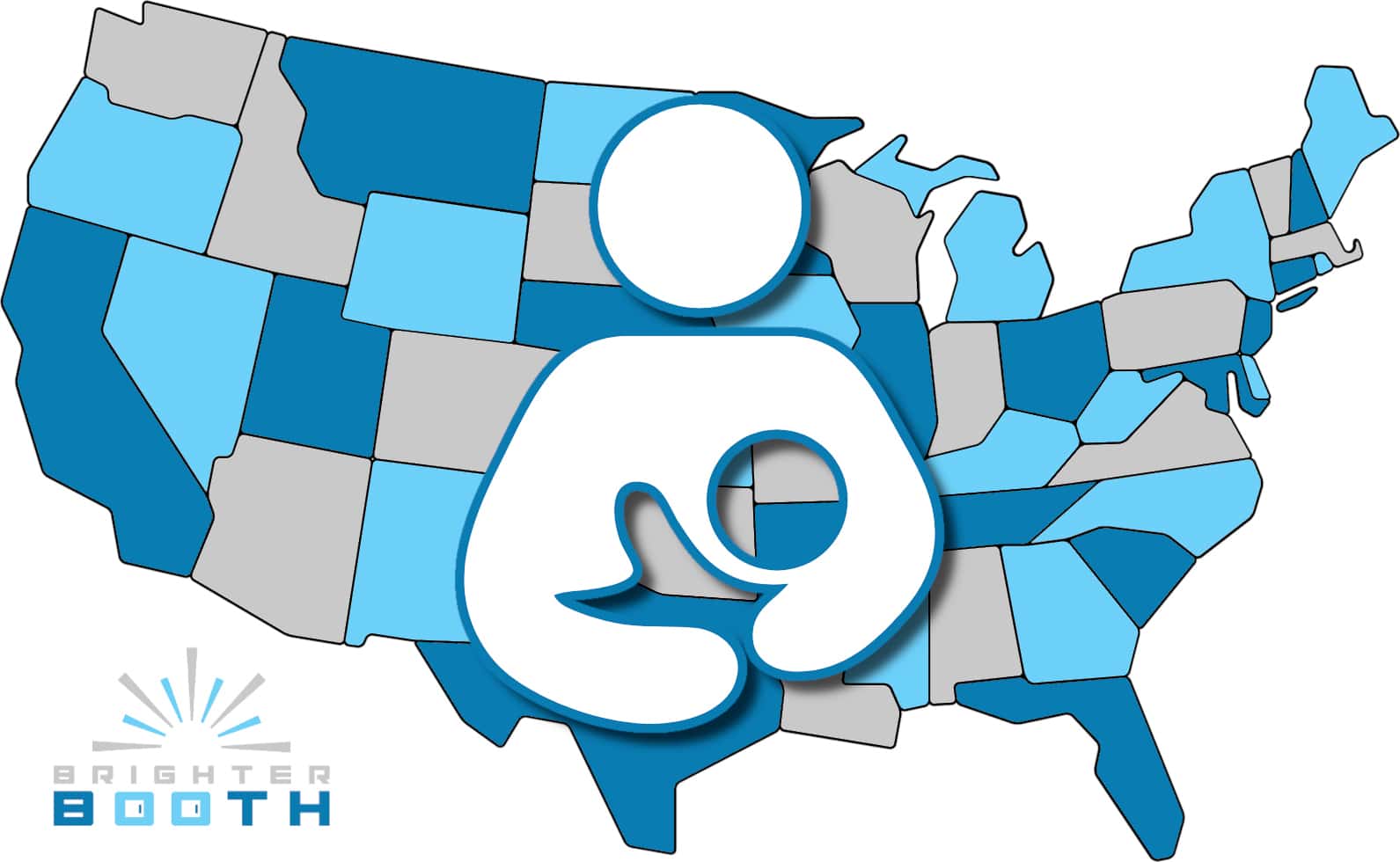
Workplace Lactation Space Laws by State (2026)
Federal law establishes minimum workplace protections for most breastfeeding employees in all 50 states. However, many states have additional requirements, including longer periods of protection, specific lactation room standards, reasonable accommodation requirements, and protections against discrimination.
The Fair Labor Standards Act (FLSA)
The Fair Labor Standards Act’s workplace lactation provisions require covered employers to provide reasonable break time and an appropriate private space for employees to express breast milk. Covered employees are entitled to these accommodations for one year after the child’s birth.
The PUMP for Nursing Mothers Act (PUMP Act)
The Providing Urgent Maternal Protections for Nursing Mothers Act, commonly known as the PUMP Act, was signed into law on December 29, 2022. It expanded the FLSA’s lactation protections to cover more employees, including many salaried employees and workers in occupations that were previously excluded.
As of 2026, the federal requirements generally include the following:
- Reasonable break time: Employers must allow covered employees to express breast milk as often as reasonably needed during the workday for up to one year after the child’s birth.
- A private lactation space: Employers must provide a functional space that is shielded from view and free from intrusion by coworkers and the public.
- No bathrooms: A bathroom, including a private restroom, does not satisfy the lactation space requirement.
- Pay requirements: Pumping breaks may be unpaid when the employee is completely relieved from duty and the applicable wage-and-hour requirements are satisfied. If an employee works during a pumping break, the time generally must be paid. Employers must also compensate pumping time when it coincides with otherwise paid breaks.
- Protection from retaliation: Employers may not unlawfully retaliate against employees for exercising their rights under the law.
Employers with fewer than 50 employees may qualify for an undue-hardship exemption from the federal break-time and space requirements if compliance would cause significant difficulty or expense in relation to the employer’s size, financial resources, nature, or structure. This is not an automatic exemption for small businesses.
The federal Pregnant Workers Fairness Act (PWFA) may provide additional protection by requiring covered employers to make reasonable accommodations for known limitations related to pregnancy, childbirth, and related medical conditions, including lactation, unless doing so would impose an undue hardship. The PWFA and PUMP Act have different coverage rules and should be evaluated separately.
What Makes a Workplace Lactation Space Compliant?
Although state requirements vary, a well-designed lactation room can help employers meet applicable requirements and support employees returning to work. A compliant space should generally include:
- Privacy: A location shielded from view and protected against intrusion.
- A non-bathroom location: A restroom or toilet stall cannot serve as a lactation space.
- A comfortable place to sit: A chair, sofa, or other suitable seating.
- A stable work surface: A clean surface for a breast pump and personal items.
- Electrical access: An outlet for equipment use.
- Availability when needed: The lactation space must be accessible whenever an employee needs to pump.
- Additional amenities where required: Depending on the state, this may include nearby running water or refrigeration.
A 50-state guide to workplace breastfeeding and lactation accommodations:
Alabama Lactation Space Laws
Federal level: The FLSA and PUMP Act generally require covered employers to provide reasonable pumping breaks and a private, non-bathroom space for up to one year after childbirth.
State level: Alabama does not have a separate statutes beyond the federal baseline.
Alaska Lactation Space Laws
Federal level: Covered employees receive federal pumping break and private-space protections under the FLSA and PUMP Act.
State level: Alaska does not have a separate statutes beyond the federal baseline.
Arizona Lactation Space Laws
Federal level: Covered employees are entitled to reasonable pumping breaks and an appropriate private space under federal law.
State level: Arizona does not have a separate statutes beyond the federal baseline.
Arkansas Lactation Space Laws
Federal level: The FLSA and PUMP Act establish the baseline for covered employees.
State level: Arkansas does not have a separate statutes beyond the federal baseline. Arkansas has additional protections for pregnant and parenting students under its Pregnant and Parenting Students Act (ACA 6-18-234).
California Lactation Space Laws
Federal level: Covered employees receive reasonable pumping breaks and private-space protections for up to one year after childbirth.
State level: California provides additional workplace lactation protections under California Labor Code Sections 1030–1034.
Employers must provide reasonable break time each time an employee needs to express milk, and a lactation location that is not a bathroom and that meets applicable requirements, including being in close proximity to the employee’s work area, shielded from view, and free from intrusion. The space must include a place to sit and a surface for a breast pump, and it must meet applicable requirements for access to electricity and nearby running water and refrigeration.
California employers generally must develop and implement a lactation accommodation policy and provide employees with information about their rights. The law contains limited hardship exceptions for qualifying employers, subject to specific statutory requirements.
California’s protections supplement federal law; employers should comply with whichever applicable requirements provide the greater protection.
Colorado Lactation Space Laws
Federal level: The FLSA and PUMP Act generally protect covered employees for one year after childbirth.
State level: Colorado’s Workplace Accommodations for Nursing Mothers Act (WANMA) extends workplace lactation protections to two years after the child’s birth. Under Colorado law, employers must allow reasonable break time and make reasonable efforts to provide a private space near the employee’s work area. The space cannot be a toilet stall.
Colorado’s law applies broadly to public and private employers, with a potential undue-hardship exception for certain space requirements. The state also has pregnancy-related reasonable accommodation protections that may apply to lactation needs.
Connecticut Lactation Space Laws
Federal level: Covered employees receive federal break-time and private-space protections.
State level: Connecticut law requires employers to allow employees to express breast milk or breastfeed during regular meal or break periods and requires reasonable efforts to provide a private location that is not a toilet stall. Applicable requirements include access to an electrical outlet and proximity to a refrigerator or suitable refrigeration facilities.
Delaware Lactation Space Laws
Federal level: Covered employees are entitled to reasonable pumping breaks and a private, non-bathroom space for up to one year after childbirth.
State level: Delaware does not have a separate statutes beyond the federal baseline.
Florida Lactation Space Laws
Federal level: The FLSA and PUMP Act establish the workplace accommodation requirements for covered employees.
State level: Florida does not have a separate statutes beyond the federal baseline.
Georgia Lactation Space Laws
Federal level: Covered employees generally have a right to reasonable pumping breaks and an appropriate private space under the FLSA and PUMP Act.
State level: Georgia law addresses breastfeeding accommodations in the workplace, but does not expand on the federal baseline.
Hawaii Lactation Space Laws
Federal level: The FLSA and PUMP Act generally protect covered employees for up to one year after childbirth.
State level: Hawaii has state workplace protections concerning lactation accommodations, including requirements related to break time and suitable space for expressing milk. Employers should review Hawaii Revised Statutes Chapter 378 and applicable regulations for coverage and implementation requirements.
Idaho Lactation Space Laws
Federal level: Covered employees are entitled to reasonable pumping breaks and a private, non-bathroom space under federal law.
State level: Idaho does not have a separate statutes beyond the federal baseline.
Illinois Lactation Space Laws
Federal level: Covered employees receive federal pumping break and private-space protections for up to one year after childbirth.
State level: Illinois provides additional workplace lactation protections under the Nursing Mothers in the Workplace Act and the Illinois Human Rights Act.
The Nursing Mothers in the Workplace Act requires covered employers to provide reasonable break time to express breast milk and reasonable efforts to provide a private location near the employee’s work area. The location cannot be a toilet stall. The law generally applies to employers with six or more employees.
A significant 2026 update: Effective January 1, 2026, Illinois strengthened its rules concerning compensation for pumping breaks and the use of paid leave. Employers should review the amended Nursing Mothers in the Workplace Act to determine how these requirements apply to their policies and payroll practices.
Illinois also requires reasonable accommodations for pregnancy, childbirth, and related medical conditions, including lactation, under the Illinois Human Rights Act, subject to applicable legal standards.
Indiana Lactation Space Laws
Federal level: The FLSA and PUMP Act provide reasonable pumping breaks and private-space protections for covered employees.
State level: Indiana law requires employers with 25 or more employees to provide a private location other than a toilet stall for expressing breast milk to the extent reasonably possible. Employers must also provide or allow employees to provide appropriate cold storage for breast milk.
Iowa Lactation Space Laws
Federal level: Covered employees receive federal pumping break and private-space protections.
State level: Iowa does not have a separate statutes beyond the federal baseline.
Kansas Lactation Space Laws
Federal level: The FLSA and PUMP Act generally require covered employers to provide reasonable pumping breaks and a private, non-bathroom space.
State level: Kansas does not have a separate statutes beyond the federal baseline.
Kentucky Lactation Space Laws
Federal level: Covered employees are entitled to reasonable pumping breaks and private space under the FLSA and PUMP Act.
State level: Kentucky has additional protections concerning reasonable accommodations for pregnancy, childbirth, and related medical conditions, including lactation. Employers should review the applicable Kentucky Pregnant Workers Act (KPWA) provisions and any relevant statutory amendments when determining their accommodation obligations.
Louisiana Lactation Space Laws
Federal level: The FLSA and PUMP Act generally establish the workplace pumping requirements for covered employees.
State level: Louisiana does not have a separate statutes beyond the federal baseline. The state has separate requirements concerning lactation accommodations for students in public schools.
Maine Lactation Space Laws
Federal level: Covered employees receive federal pumping break and private-space protections for up to one year after childbirth.
State level: Maine extends workplace lactation protections to three years after the child’s birth. Employers must provide reasonable break time and a suitable private location for expressing breast milk, subject to applicable statutory provisions.
Because Maine’s protection period exceeds the federal one-year period, employers should ensure that their policies and lactation-space arrangements remain available throughout the applicable state protection period.
Maryland Lactation Space Laws
Federal level: Covered employees receive reasonable pumping breaks and private-space protections under the FLSA and PUMP Act.
State level: Maryland does not have a separate statutes beyond the federal baseline.
Massachusetts Lactation Space Laws
Federal level: Covered employees receive federal pumping break and private-space protections.
State level: Massachusetts law requires covered employers to provide reasonable accommodations for lactation or the need to express breast milk, unless the employer demonstrates undue hardship. Accommodations may include more frequent or longer breaks and a private, non-bathroom location for expressing milk.
Michigan Lactation Space Laws
Federal level: The FLSA and PUMP Act generally require covered employers to provide pumping breaks and private space for up to one year after childbirth.
State level: Michigan does not have a separate statutes beyond the federal baseline. Michigan’s employment discrimination law addresses sex, pregnancy, childbirth, and related medical conditions, which may provide additional protection for lactating employees.
Minnesota Lactation Space Laws
Federal level: Covered employees receive reasonable pumping breaks and private-space protections under federal law.
State level: Minnesota provides additional workplace lactation protections, including requirements for reasonable break time and a private space other than a bathroom. Minnesota law also protects employees against reductions in compensation for time used to express milk under applicable requirements.
Minnesota’s protections may apply more broadly than the federal law, including to employers with more than one employee. Employers should consult Minnesota Statutes Section 181.939 and related provisions for current requirements.
Mississippi Lactation Space Laws
Federal level: The FLSA and PUMP Act generally protect covered employees who need to express breast milk at work.
State level: Mississippi has state workplace provisions addressing breastfeeding and pumping breaks. Employers should review Mississippi Code Section 71-1-55 and any applicable amendments to determine the specific requirements, including how existing breaks may be used for expressing milk.
Missouri Lactation Space Laws
Federal level: Covered employees are entitled to reasonable pumping breaks and private space under federal law.
State level: Missouri has additional provisions concerning lactation accommodations in public schools, including protections for certain employees and students. These requirements are distinct from a universal state workplace lactation-space mandate. Employers should review applicable Missouri statutes and any relevant employer-specific requirements.
Montana Lactation Space Laws
Federal level: Covered employees receive federal pumping break and private-space protections.
State level: Montana has provisions addressing lactation accommodations for public employees, including requirements affecting state and local government workplaces and certain public educational institutions. Employers should review the applicable Montana statutes and personnel policies to determine how the requirements apply to their workplace.
Nebraska Lactation Space Laws
Federal level: The FLSA and PUMP Act establish the baseline for covered employees.
State level: Nebraska provides additional protections concerning workplace lactation accommodations. Applicable state requirements address break time and suitable space for expressing breast milk and may apply to employers beyond the scope of federal requirements. Employers should consult Nebraska Revised Statutes Section 48-234 and related provisions for current coverage and requirements.
Nevada Lactation Space Laws
Federal level: Covered employees receive reasonable pumping breaks and private-space protections under federal law.
State level: Nevada requires employers to provide reasonable accommodations for pregnancy, childbirth, and related medical conditions, including lactation and the need to express breast milk. Reasonable accommodations may include revised break schedules and private, non-bathroom space.
Nevada law also prohibits discrimination or retaliation associated with requests for or use of covered lactation accommodations. Employers should review Nevada Revised Statutes Sections 613.4353–613.4383.
New Hampshire Lactation Space Laws
Federal level: Covered employees have a right to reasonable pumping breaks and private space under the FLSA and PUMP Act.
State level: New Hampshire requires covered employers to provide lactation breaks and a suitable private space, subject to applicable statutory exceptions. The state statute describes breaks of approximately 30 minutes for every three hours worked, but that schedule must not be used to restrict an employee’s broader federal right to pump as often as needed.
New Hampshire’s law generally applies to employers with six or more employees. Employers should consult New Hampshire Revised Statutes Sections 275:78–83 and follow whichever applicable rule provides the required protection.
New Jersey Lactation Space Laws
Federal level: The FLSA and PUMP Act generally require reasonable pumping breaks and private space for covered employees.
State level: New Jersey protects breastfeeding and lactation under its employment discrimination laws. Employers should review the New Jersey Law Against Discrimination and related lactation accommodation provisions for the applicable requirements, including protections against discrimination and the obligation to consider reasonable accommodations.
New Mexico Lactation Space Laws
Federal level: Covered employees are entitled to reasonable pumping breaks and private space under federal law.
State level: New Mexico has workplace provisions addressing breastfeeding accommodations, including reasonable break time and a suitable private location for expressing milk. Employers should review the applicable New Mexico statutes and regulations to confirm current requirements and how they apply to their workforce.
New York Lactation Space Laws
Federal level: Covered employees receive federal pumping break and private-space protections for up to one year after childbirth.
State level: New York extends workplace lactation protections to three years after the child’s birth.
New York employers must provide reasonable paid break time for employees to express breast milk, subject to the applicable state law. The state also has specific requirements for lactation spaces, including a private location close to the employee’s work area, appropriate lighting, a working surface, electrical access, and nearby access to running water.
Employers should consult New York Labor Law Section 206-c and the New York State Department of Labor’s current lactation accommodation guidance. Where applicable state and federal laws differ, employers must satisfy the more protective requirements.
North Carolina Lactation Space Laws
Federal level: Covered employees receive reasonable pumping breaks and private-space protections under the FLSA and PUMP Act.
State level: North Carolina does not have a separate statutes beyond the federal baseline. Additional protections may apply under pregnancy-related accommodation or employment discrimination laws, depending on the circumstances.
North Dakota Lactation Space Laws
Federal level: The FLSA and PUMP Act generally require covered employers to provide pumping breaks and an appropriate private space.
State level: North Dakota does not have a separate statutes beyond the federal baseline. State employment discrimination protections relating to sex, pregnancy, childbirth, and related conditions may also be relevant.
Ohio Lactation Space Laws
Federal level: Covered employees receive reasonable pumping breaks and private-space protections under federal law.
State level: Ohio does not have a separate statutes beyond the federal baseline. Ohio’s employment discrimination law addresses sex, pregnancy, childbirth, and related medical conditions and may provide additional protection in particular cases.
Oklahoma Lactation Space Laws
Federal level: The FLSA and PUMP Act generally protect covered employees who need to express breast milk at work.
State level: Oklahoma law addresses workplace breastfeeding accommodations, including reasonable break time and reasonable efforts to provide a private, secure, sanitary location near the employee’s work area that is not a toilet stall. Employers should review Oklahoma Statutes Title 40, Section 435, and current federal requirements when developing workplace policies.
Oregon Lactation Space Laws
Federal level: Covered employees receive reasonable pumping breaks and private-space protections under the FLSA and PUMP Act.
State level: Oregon law provides workplace lactation protections that address reasonable rest periods and suitable space for expressing breast milk. Employers should review Oregon Revised Statutes Section 653.077 and related provisions for current requirements and any applicable exceptions.
Oregon’s state provisions should be read together with federal law to ensure that employees receive breaks as often as needed, rather than being limited to a fixed pumping schedule.
Pennsylvania Lactation Space Laws
Federal level: Covered employees are entitled to reasonable pumping breaks and a private, non-bathroom space under the FLSA and PUMP Act.
State level: Pennsylvania does not have a separate statutes beyond the federal baseline. Employers should still evaluate applicable federal protections concerning pregnancy, childbirth, and related medical conditions.
Rhode Island Lactation Space Laws
Federal level: Covered employees receive federal pumping break and private-space protections.
State level: Rhode Island has state provisions addressing workplace lactation accommodations. Employers should review Rhode Island General Laws Section 23-13.2-1 and related employment protections to confirm the current requirements for pumping breaks and private space.
South Carolina Lactation Space Laws
Federal level: The FLSA and PUMP Act generally protect covered employees for up to one year after childbirth.
State level: South Carolina’s pregnancy accommodation law requires covered employers to provide reasonable accommodations for medical needs arising from pregnancy, childbirth, or related medical conditions. Employers should review the applicable statutory requirements, including the employer-size threshold and any undue-hardship provisions, when assessing lactation accommodation requests.
South Dakota Lactation Space Laws
Federal level: Covered employees receive reasonable pumping breaks and private-space protections under federal law.
State level: South Dakota does not have a separate statutes beyond the federal baseline. Applicable federal anti-discrimination and accommodation protections may still apply.
Tennessee Lactation Space Laws
Federal level: The FLSA and PUMP Act generally require covered employers to provide reasonable pumping breaks and a private space.
State level: Tennessee has provisions concerning breastfeeding breaks and accommodations in employment. The state also provides pregnancy-related workplace accommodation protections under its Pregnant Workers Fairness Act. Employers should review the current Tennessee statutes to determine which provisions apply to their workplace and employee population.
Texas Lactation Space Laws
Federal level: Covered employees receive reasonable pumping breaks and private-space protections under the FLSA and PUMP Act.
State level: Texas law addresses workplace breastfeeding accommodations, including reasonable break time and suitable private space for expressing breast milk. Employers should review Texas Health and Safety Code provisions and applicable labor requirements for current obligations.
Texas also has initiatives encouraging employers to become mother-friendly workplaces, but voluntary programs should not be confused with mandatory legal requirements.
Utah Lactation Space Laws
Federal level: Covered employees are entitled to reasonable pumping breaks and private space under federal law.
State level: Utah has provisions addressing workplace lactation accommodations. Employers should review the applicable Utah Code provisions for requirements concerning break time, suitable space, and any additional state protections that apply to their employees.
Vermont Lactation Space Laws
Federal level: The FLSA and PUMP Act generally protect covered employees for one year after childbirth.
State level: Vermont extends workplace lactation protections to two years after the child’s birth. Employers must provide reasonable break time and a private location other than a bathroom for expressing breast milk, subject to applicable statutory provisions.
Virginia Lactation Space Laws
Federal level: Covered employees receive reasonable pumping breaks and private-space protections under federal law.
State level: Virginia Code § 2.2-3905 has separate provisions concerning lactation accommodations for students and employees in public school settings. Employers should consult the Virginia Human Rights Act and applicable school-related statutes for the requirements relevant to their workplace.
Washington Lactation Space Laws
Federal level: Covered employees receive reasonable pumping breaks and private-space protections under the FLSA and PUMP Act.
State level: Washington extends workplace lactation protections to two years after the child’s birth. State law requires employers to provide reasonable break time and suitable private space for expressing breast milk, subject to applicable statutory requirements and exceptions.
Employers should review Washington Revised Code Section 43.10.005 and related employment provisions, as well as current state guidance, to confirm the specific obligations that apply to their workplace.
West Virginia Lactation SpaceLaws
Federal level: The FLSA and PUMP Act generally protect covered employees for up to one year after childbirth.
State level: West Virginia does not have a separate statutes beyond the federal baseline.
Wisconsin Lactation Space Laws
Federal level: Covered employees receive reasonable pumping breaks and private-space protections under federal law.
State level: Wisconsin does not have a separate statutes beyond the federal baseline.
Wyoming Lactation Space Laws
Federal level: The FLSA and PUMP Act generally require covered employers to provide reasonable pumping breaks and a private, non-bathroom space.
State level: Wyoming does not have a separate statutes beyond the federal baseline.
Brighter Booth offers the easiest way to add a lactation space to your workplace, support working moms, and comply with lactation space laws.